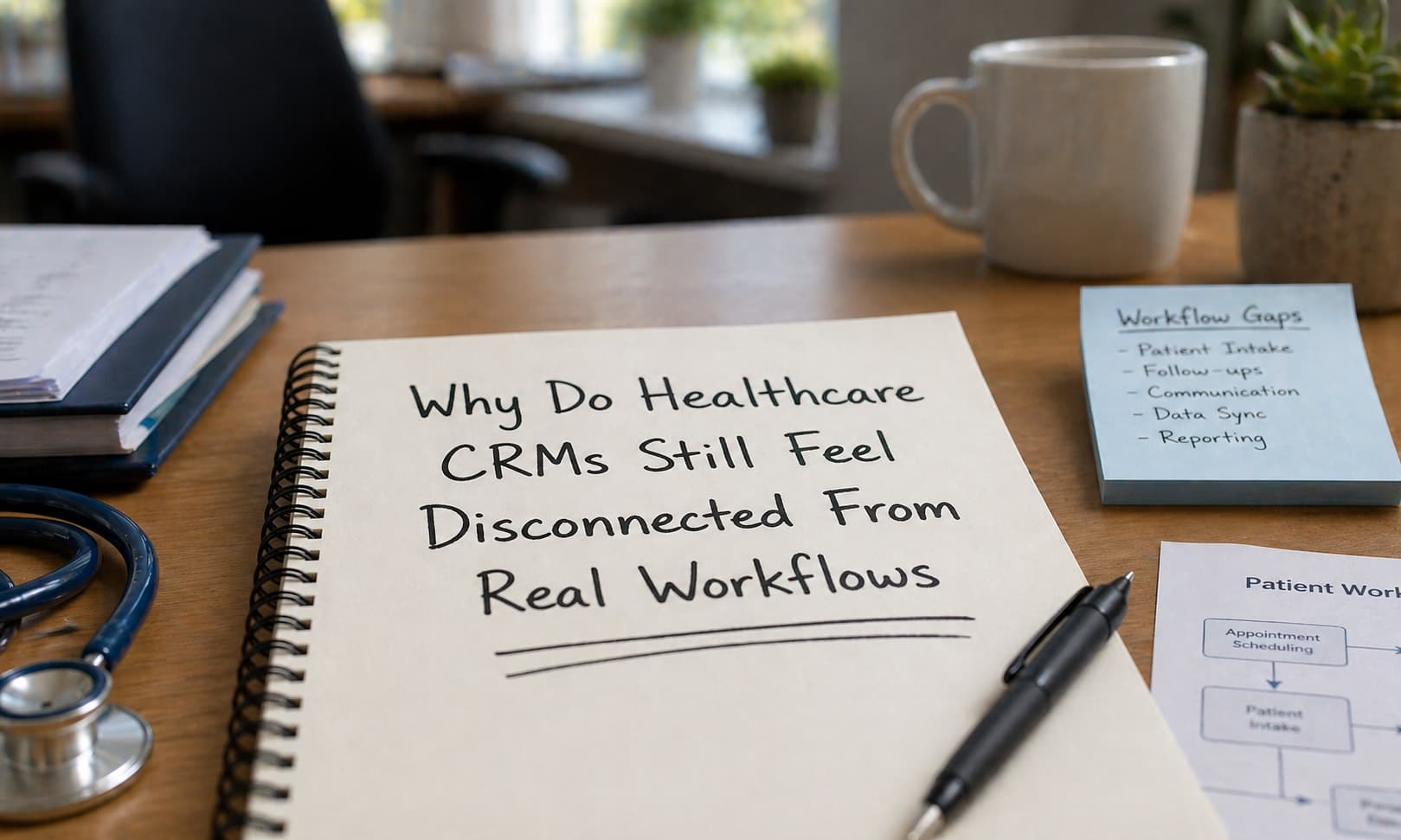

Why Do Healthcare CRMs Feel Disconnected From Real Workflows
Why Healthcare CRM Systems Fail Real Clinical Workflows. Most healthcare CRMs look good in demos. They show dashboards, reports, and clean data. But once teams start using them daily, things feel off. The system does not match how clinics actually work.
The Core Problem
Healthcare workflows are not simple. They involve patients, appointments, follow-ups, billing, and communication. All of this happens at the same time. Many CRMs try to fit this into a generic structure. That is where the gap starts.
Where CRMs Break in Real Workflows
1. Too Many Steps for Simple Tasks
Booking or updating a patient often takes more steps than needed.
Staff ends up doing extra work instead of saving time.
2. Poor Fit for Clinical Processes
Healthcare is not just sales tracking.
Therapy sessions, care plans, and patient history need a different structure. Generic CRMs do not handle this well.
3. Scattered Information
Patient notes, communication, and reports sit in different sections.
Teams waste time searching instead of acting.
4. Weak Follow-Up Systems
Follow-ups are critical in healthcare.
Many systems either miss them or make them manual.
5. Limited Customization Where It Matters
CRMs offer customization, but not in the areas clinics need most.
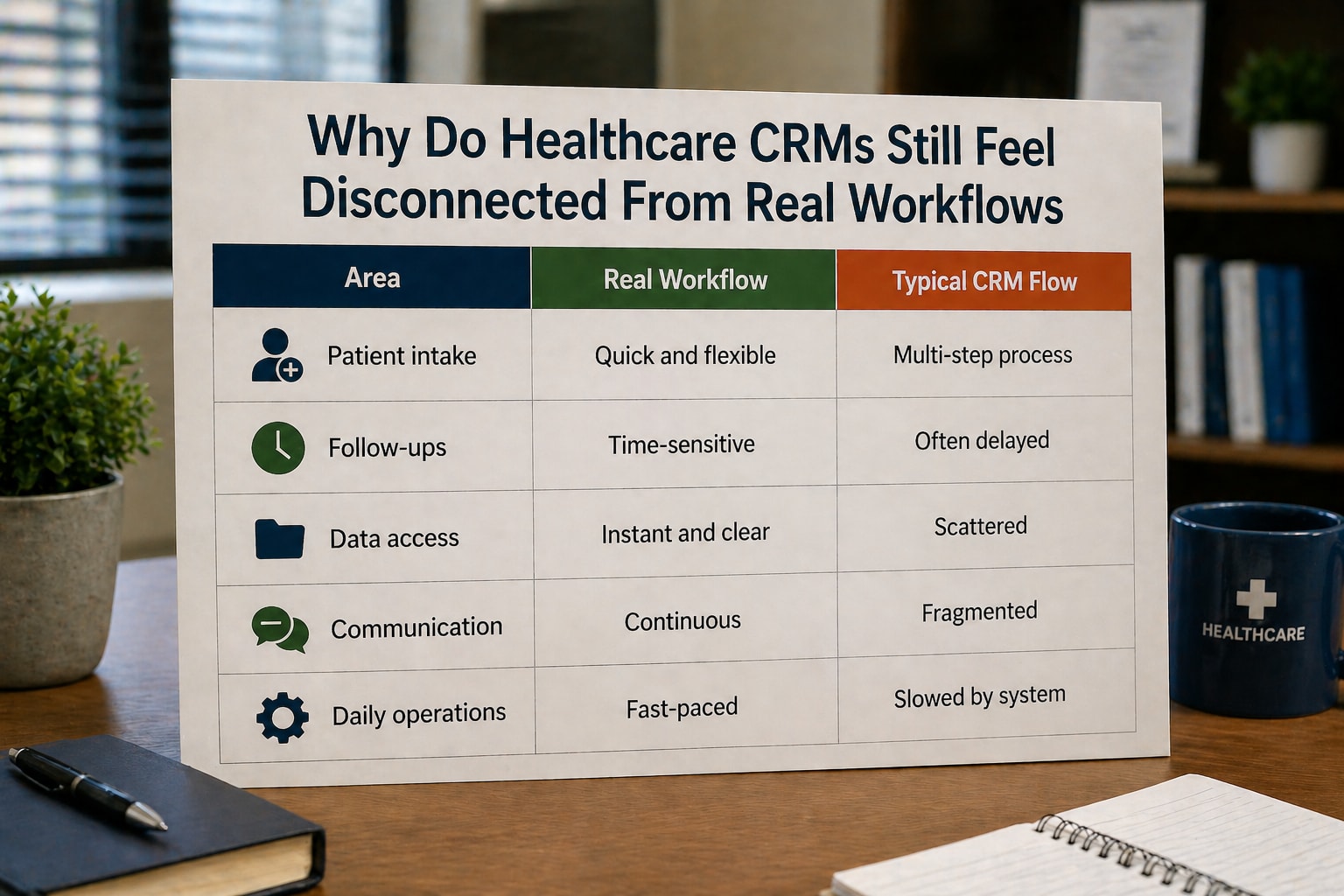
Real Workflow vs CRM Workflow
Area | Real Workflow | Typical CRM Flow |
|---|---|---|
Patient intake | Quick and flexible | Multi-step process |
Follow-ups | Time-sensitive | Often delayed |
Data access | Instant and clear | Scattered |
Communication | Continuous | Fragmented |
Daily operations | Fast-paced | Slowed by system |
Why CRM Software For Therapists Feels Different
Some tools are built closer to real use.
CRM Software For Therapists focuses on actual clinic needs instead of generic tracking.
Session-based workflows
Easy scheduling
Built-in reminders
Simple patient records This is why many clinics are moving toward CRM Software For Therapists instead of standard CRMs.
The Hidden Issue Most Teams Ignore
The problem is not just the tool. It is how the tool is designed. Most CRMs are built for sales teams first. Healthcare is added later. That creates friction in daily work.
What a Good Healthcare CRM Should Do
A system should feel like part of the workflow, not an extra layer. Look for:
Fast patient entry and updates
Clear timeline of interactions
Automated follow-ups
Simple navigation
Real-time data access CRM Software For Therapists often gets closer to this because it starts with the workflow, not features.
Signs Your CRM Is Not Working
Staff avoids using it
Data is incomplete or outdated
Follow-ups are missed
Teams use multiple tools for one task
If this sounds familiar, the system is slowing you down.
How to Fix the Gap
You do not always need a new tool. Start with these steps:
Map your real workflow before choosing a CRM
Remove unnecessary steps
Train your team properly. Use automation where it actually helps. If needed, switch to CRM Software For Therapists that matches how your clinic operates.
Frequently Asked Questions
Why do healthcare CRMs feel hard to use
Most are built for general business use, not clinical workflows. This creates extra steps and confusion.
What makes a CRM suitable for therapists
Tools designed for therapy include session tracking, simple scheduling, and easy patient records.
Can a CRM improve patient care
Yes, if it supports faster follow-ups, better communication, and organized data.
Why do teams stop using CRM systems
When systems slow down work or feel complex, teams avoid them and rely on manual methods.
Is CRM Software For Therapists better than general CRMs
In many cases yes, because it aligns better with real therapy workflows and daily tasks.
Related Posts
Why Therapists Need A HIPAA-Compliant CRM In 2026
Learn why a HIPAA-compliant CRM for therapists is essential. Protect patient data, streamline workflows, and improve practice efficiency safely and securely.

The Importance Of A HIPAA-Compliant CRM For Therapists
Discover why a HIPAA-compliant CRM for therapists is essential. Protect client data, streamline scheduling, billing, and enhance practice efficiency securely.