
CRM For Inpatient Rehab Facility
Best CRM Software for Inpatient Rehab Facility Management. Inpatient rehab facilities deal with more than patient care.
Admissions, treatment plans, communication, and follow-ups all run together. When these are not connected, teams lose time and clarity. A CRM helps bring structure to this process.
Why Rehab Facilities Need a CRM
Most rehab centers still use separate tools for admissions, records, and communication. That leads to common issues:
Delayed patient intake
Missed follow-ups
Scattered patient data
Poor coordination between teams. A CRM solves this by keeping everything in one system.
What a CRM Does in a Rehab Facility
A CRM is not just for tracking leads. In rehab settings, it helps manage the full patient journey.
Core Functions
Patient intake and admission tracking
Communication between staff and patients
Follow-up reminders and care tracking
Reporting and performance insights. Many centers now use CRM Software For Therapists to handle both care and coordination.
Best CRM Options for Rehab Facilities
Here are tools that work well in healthcare and rehab setups.
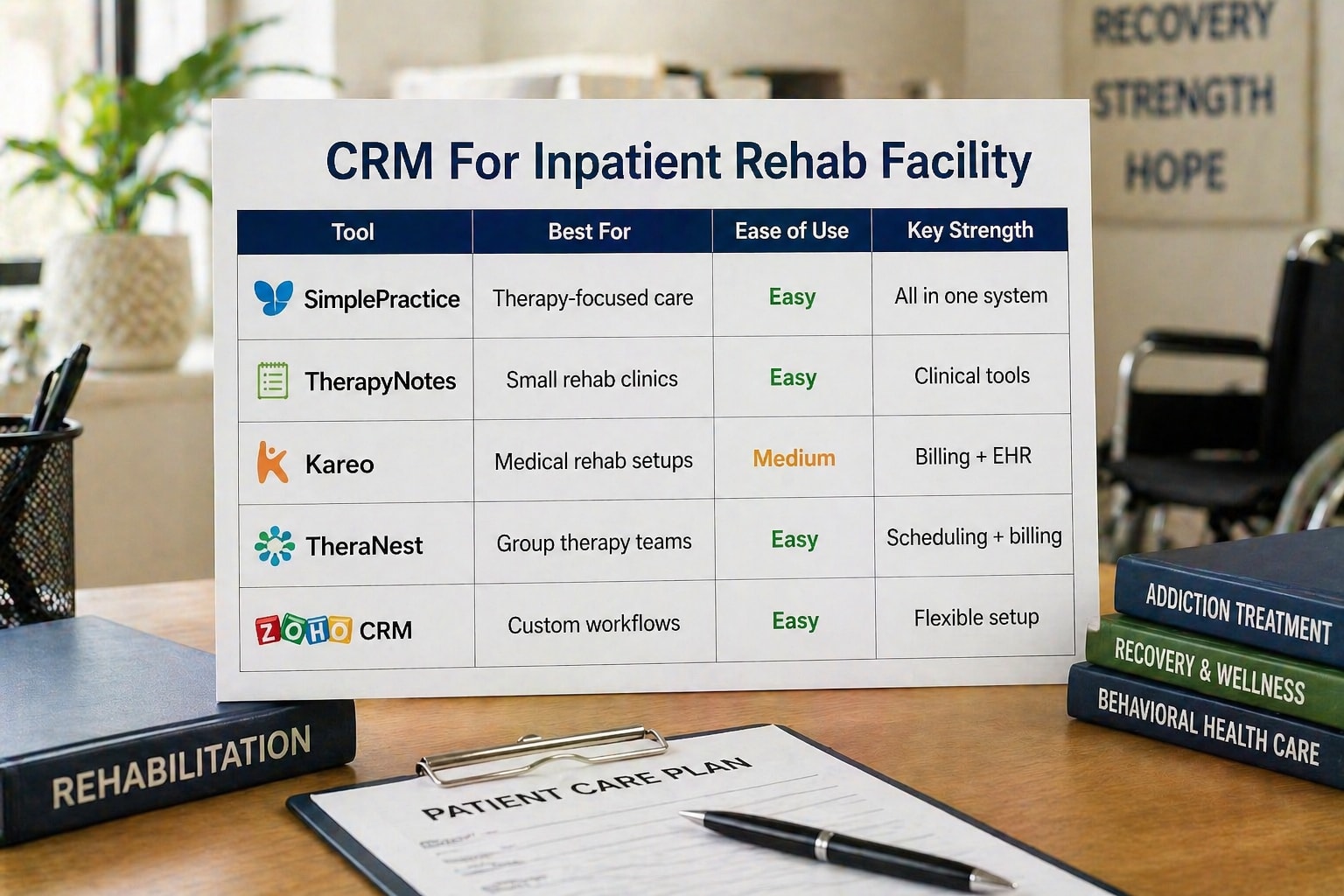
Tool | Best For | Ease of Use | Key Strength |
|---|---|---|---|
SimplePractice | Therapy-focused care | Easy | All in one system |
TherapyNotes | Small rehab clinics | Easy | Clinical tools |
Kareo | Medical rehab setups | Medium | Billing + EHR |
TheraNest | Group therapy teams | Easy | Scheduling + billing |
Zoho CRM | Custom workflows | Easy | Flexible setup |
Many of these tools act as CRM Software For Therapists, which fits rehab workflows better than general CRMs.
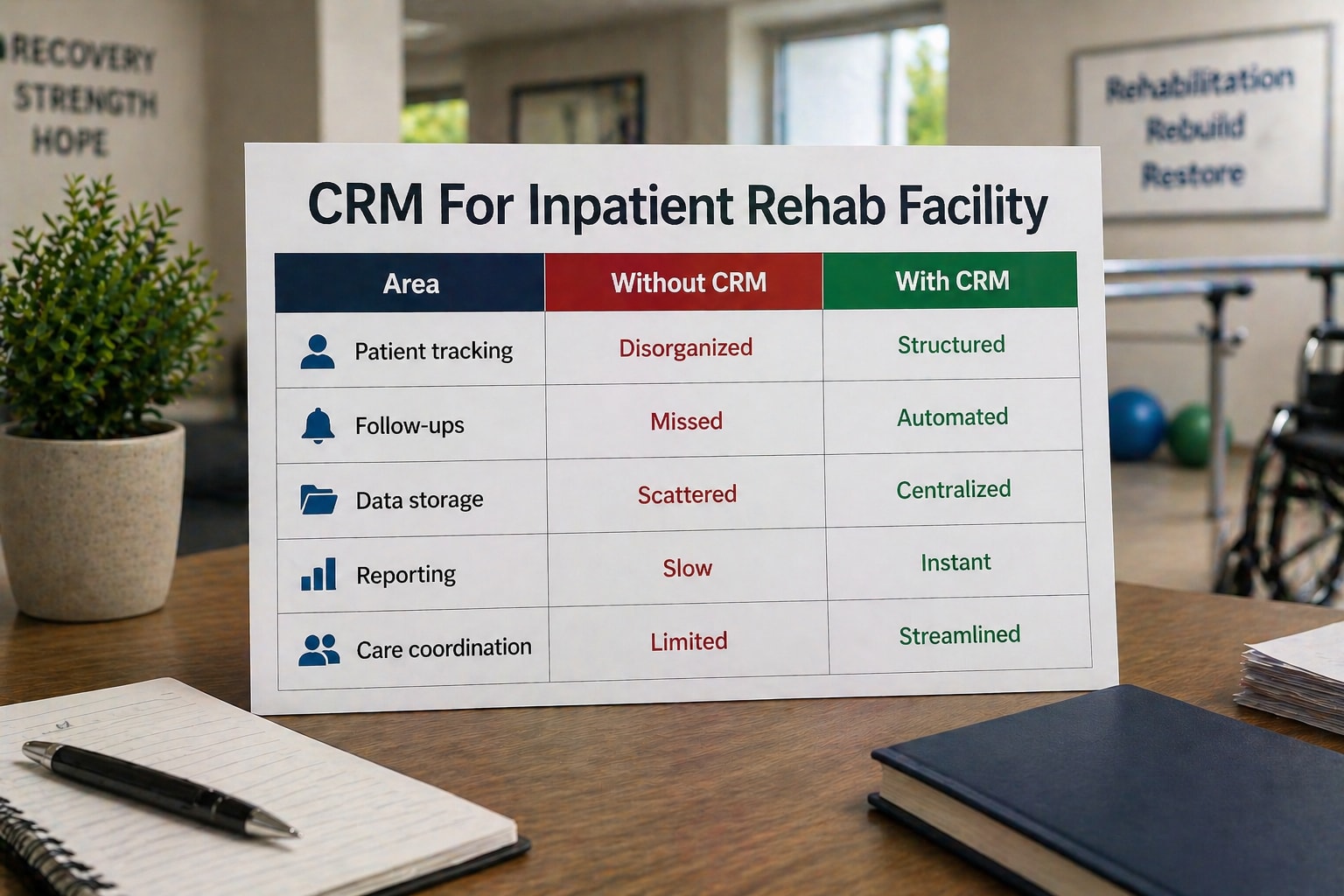
CRM vs Manual Rehab Workflow
Area | Without CRM | With CRM |
|---|---|---|
Patient tracking | Disorganized | Structured |
Follow-ups | Missed | Automated |
Data storage | Scattered | Centralized |
Reporting | Slow | Instant |
Care coordination | Limited | Streamlined |
How CRM Software For Therapists Improves Rehab Work
Rehab facilities rely on consistency. CRM Software For Therapists helps by:
Keeping patient history in one place
Tracking sessions and progress
Setting automated follow-ups
Improving team communication.
This reduces manual work and improves patient care.
Key Features to Look For
When choosing a CRM for rehab, focus on daily use.
1. Admission Tracking
Handle patient intake without delays.
2. Scheduling
Manage therapy sessions and staff calendars.
3. Communication
Track calls, notes, and updates.
4. Billing Support
Handle payments and insurance processes.
5. Reporting
Monitor patient progress and facility performance.
When Should You Use a CRM
You should consider a CRM if:
You manage multiple patients daily
Your team uses different tools for one process
Follow-ups are often missed
You need better reporting and visibility.
Even small rehab facilities benefit early.
Common Mistakes to Avoid
Choosing tools that are too complex
Ignoring ease of use
Not training staff properly
Using CRM only for storage.
A CRM should support real workflows.
Frequently Asked Questions
What is the best CRM for inpatient rehab facilities
SimplePractice and TherapyNotes are widely used due to their therapy-focused features
Can CRM Software For Therapists be used in rehab centers
Yes, it helps manage sessions, patient tracking, and follow-ups effectively.
Does CRM handle patient scheduling
Yes, most systems include scheduling, reminders, and calendar management.
Is CRM secure for patient data
Most healthcare CRMs follow strict data protection standards.
Why do rehab centers need CRM
To manage patient data, improve coordination, and reduce manual work.
Related Posts

Why Therapists Need A HIPAA-Compliant CRM In 2026
Learn why a HIPAA-compliant CRM for therapists is essential. Protect patient data, streamline workflows, and improve practice efficiency safely and securely.

The Importance Of A HIPAA-Compliant CRM For Therapists
Discover why a HIPAA-compliant CRM for therapists is essential. Protect client data, streamline scheduling, billing, and enhance practice efficiency securely.