Why Therapists Need A HIPAA-Compliant CRM In 2026
Learn why a HIPAA-compliant CRM for therapists is essential. Protect patient data, streamline workflows, and improve practice efficiency safely and securely.
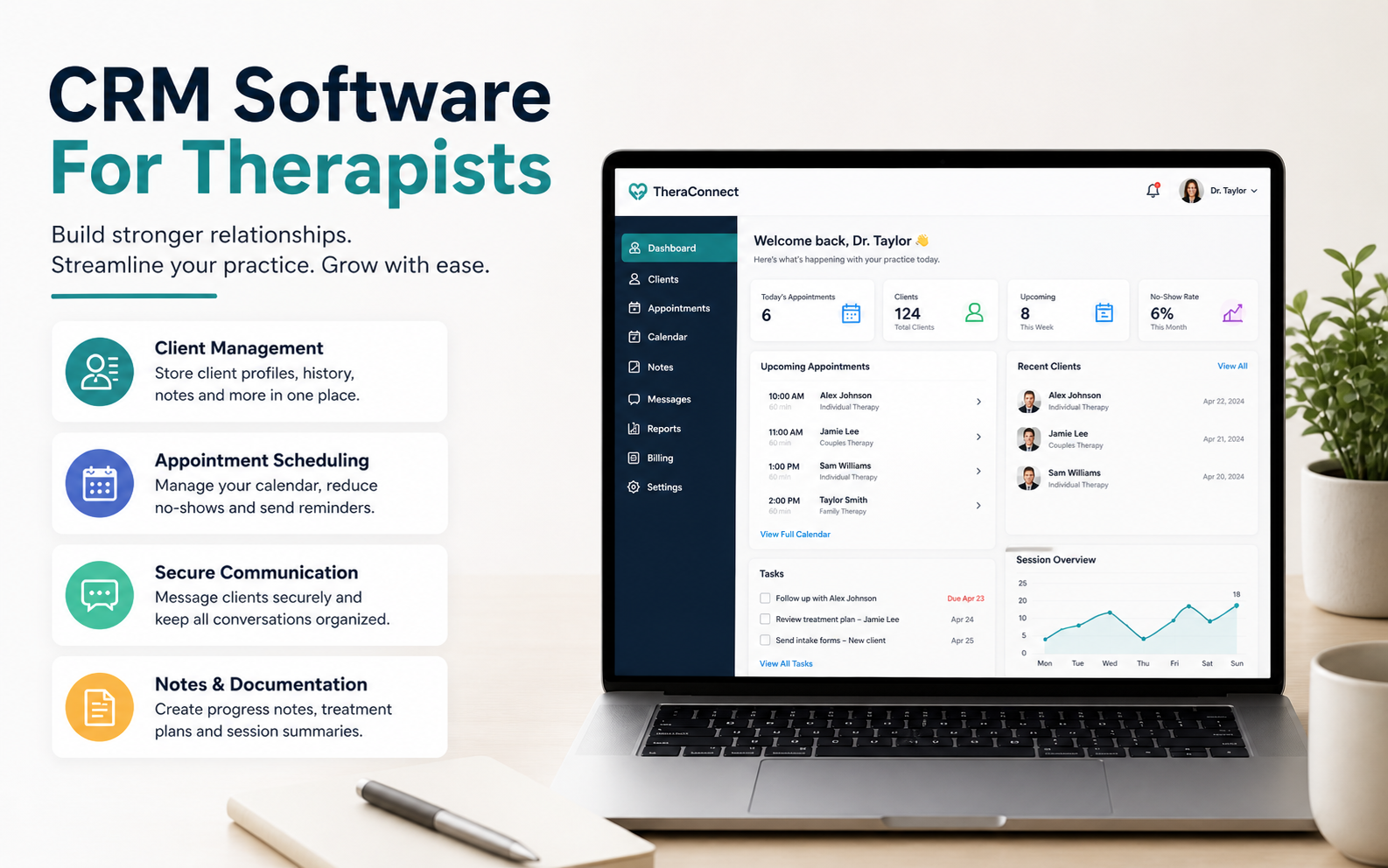
A therapy CRM is a client management system built around the specific needs of mental health and healthcare professionals. Unlike generic CRMs designed for sales teams, a therapy-focused CRM handles HIPAA-compliant intake forms, session scheduling, automated reminders, billing, and client communication all from one platform.
For solo practitioners and group practices alike, it replaces scattered spreadsheets, email threads, and paper forms with a single, organized system that keeps every client interaction documented and accessible.
General-purpose CRMs were not built for healthcare. They lack the compliance safeguards, clinical workflow structure, and client sensitivity that therapy practices require.
A dedicated therapy CRM solves three core problems every practice faces. First, it reduces administrative load, including intake forms, reminders, and follow-ups, which run automatically without manual effort. Second, it protects client data through HIPAA-compliant storage, encrypted communication, and controlled access. Third, it improves client retention by keeping communication consistent, flagging missed appointments early, and making re-engagement straightforward.
If your practice is growing and your current system depends on memory, sticky notes, or generic tools, a therapy CRM is not optional; it is the infrastructure your practice needs to function properly.
Here are the main things to look for in CRMs for therapists:
1. Client management
Client management keeps names, forms, notes, and records together. You can see how clients are doing and plan visits. This helps when a client comes back.
2. Scheduling and reminders
A CRM with scheduling lets clients book or change visits online. It sends reminders by text or email. Clients remember their visits and can change their times if needed.
3. Billing and payments
A CRM with billing makes bills, checks payments, and helps with cards or insurance.
4. HIPAA Compliance
Pick a CRM that follows rules. These CRMs use passwords and keep records to keep client info safe.
5. Automation and workflows
Automation helps you send forms, get feedback, and remind clients about visits.
6. Integrations
Integrations connect calendars, calls, and records. You do not enter the same info twice. This helps you keep things up to date.
7. Reports for Therapy Practices
A therapy CRM makes simple reports. You can see how many clients visit, where they come from, and how much money you get. This helps you plan your work.
Not every CRM that claims to be HIPAA-compliant actually meets the full standard. Before committing to any platform, check for these four things.
Business Associate Agreement (BAA)
The software provider must be willing to sign a BAA. This is a legal requirement under HIPAA and confirms that the vendor shares responsibility for protecting client data. If a CRM will not sign one, walk away.
Encrypted data storage and transmission
Client records, session notes, and communication must be encrypted both at rest and in transit. This ensures data cannot be intercepted or accessed by unauthorized parties.
Role-based access controls
In group practices, not everyone needs access to every client file. A compliant CRM lets you control exactly who can see what, reducing the risk of internal data exposure.
Audit logs
The system should automatically record who accessed client data, when, and what changes were made. This is both a compliance requirement and a practical safeguard for your practice.
If a CRM you are considering cannot confirm all four of these, it is not truly HIPAA compliant, regardless of what its marketing page says.
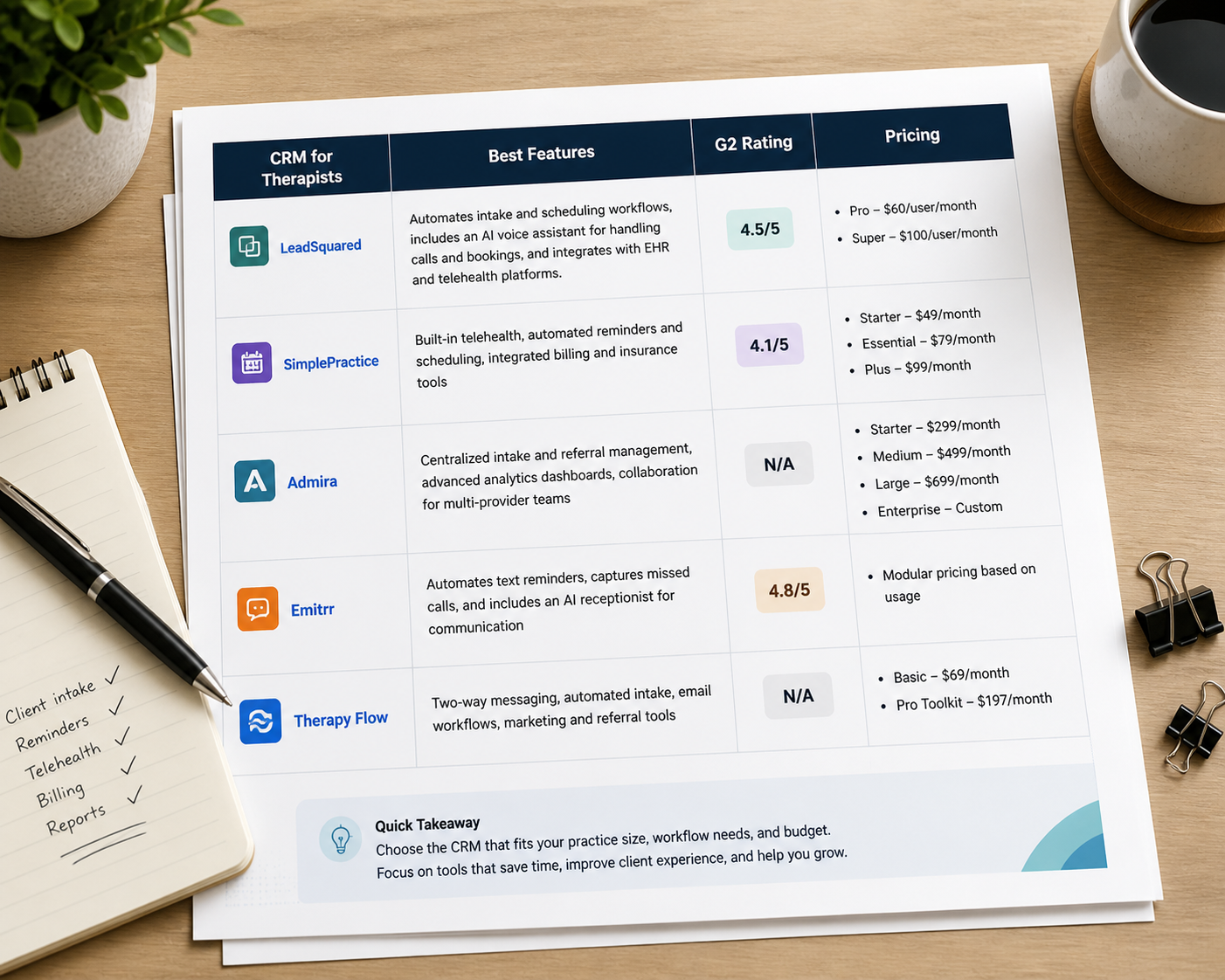
CRM for Therapists | Best Features | G2 Rating | Pricing |
|---|---|---|---|
Automates intake and scheduling workflows, includes an AI voice assistant for handling calls and bookings, and integrates with EHR and telehealth platforms. | 4.5/5 | Pro – $60/user/month Super – $100/user/month | |
Built-in telehealth, automated reminders and scheduling, integrated billing and insurance tools | 4.1/5 | Starter – $49/month Essential – $79/month Plus – $99/month | |
Centralized intake and referral management, advanced analytics dashboards, collaboration for multi-provider teams | N/A | Starter – $299/month Medium – $499/month Large – $699/month Enterprise – Custom | |
Automats text reminders, captures missed calls, and includes an AI receptionist for communication | 4.8/5 | Modular pricing based on usage | |
Two-way messaging, automated intake, email workflows, marketing and referral tools | N/A | Basic – $69/month Pro Toolkit – $197/month |
The video above covers exactly why admin overload is one of the biggest challenges in running a therapy practice. A CRM solves this by automating the tasks that pull you away from client care scheduling, reminders, intake forms, and follow-ups, all of which run in the background while you focus on your work.
If you have ever wondered whether you need a CRM, an EHR, or a PMS, or all three, here is the simplest breakdown.
System | Main Purpose | Focus Area | Example Tasks |
CRM | Manage relationships | Communication & engagement | Track interactions, follow-ups |
EHR | Store clinical data | Patient health records | Notes, diagnosis, treatment |
PMS | Run operations | Admin & workflows | Scheduling, billing |
When evaluating a CRM, check which of these systems it integrates with. The fewer tools you have to switch between, the more time you save every week.
A CRM for therapists keeps all client info, messages, meetings, and payments together. You help clients from start to end and keep their info safe.
Yes. CRM sends texts and emails to remind clients about meetings. Clients get messages at the right time and can change meetings if they want. If you use reminders, you miss fewer meetings.
Yes, use a CRM for health care. The best therapy CRM keeps info safe. Only a few people can see it. It keeps a record of what happens. There is a rule to keep info safe by law.
A CRM for therapy helps you talk to clients and keep in touch. An EHR stores notes about health and treatment. Use CRM to work with clients. Use EHR to keep health records. Both are helpful, but for different things.
The best CRM gives you client info, calendars, reminders, forms, bills, messages, and reports. The best ones help you follow rules, make calls, and save time, so you work better.
You pay $30 to $100 each month for CRM for therapists. Basic plans give you a calendar and help you with clients. Better tools save time, make reports, do bills, and let clients log in. Some companies, like Emitter, let you pick and pay for what you want.
If you work alone, you can use CRM to send forms, reminders, and messages. If you get more clients, the system grows and helps you stay organized.
CRM software makes therapy more personal. It gives you client details before each visit. You do less paper work, so you can help clients more and make each meeting better.
Final Thoughts
Pick the right CRM for therapists. A good CRM does more than store info. It helps you talk with clients, do less paperwork, and give better care. If you get more clients, a CRM helps you keep track of everyone. The best ones show each client's progress. A good CRM helps you help clients.
Learn why a HIPAA-compliant CRM for therapists is essential. Protect patient data, streamline workflows, and improve practice efficiency safely and securely.

Discover why a HIPAA-compliant CRM for therapists is essential. Protect client data, streamline scheduling, billing, and enhance practice efficiency securely.
Explore the best CRM software for therapists in 2026. Streamline scheduling, billing, and client communication while keeping records organized and secure.
Compare CRM and EHR systems for therapists. Learn features, differences, and which platform helps streamline client management and billing in private practices.