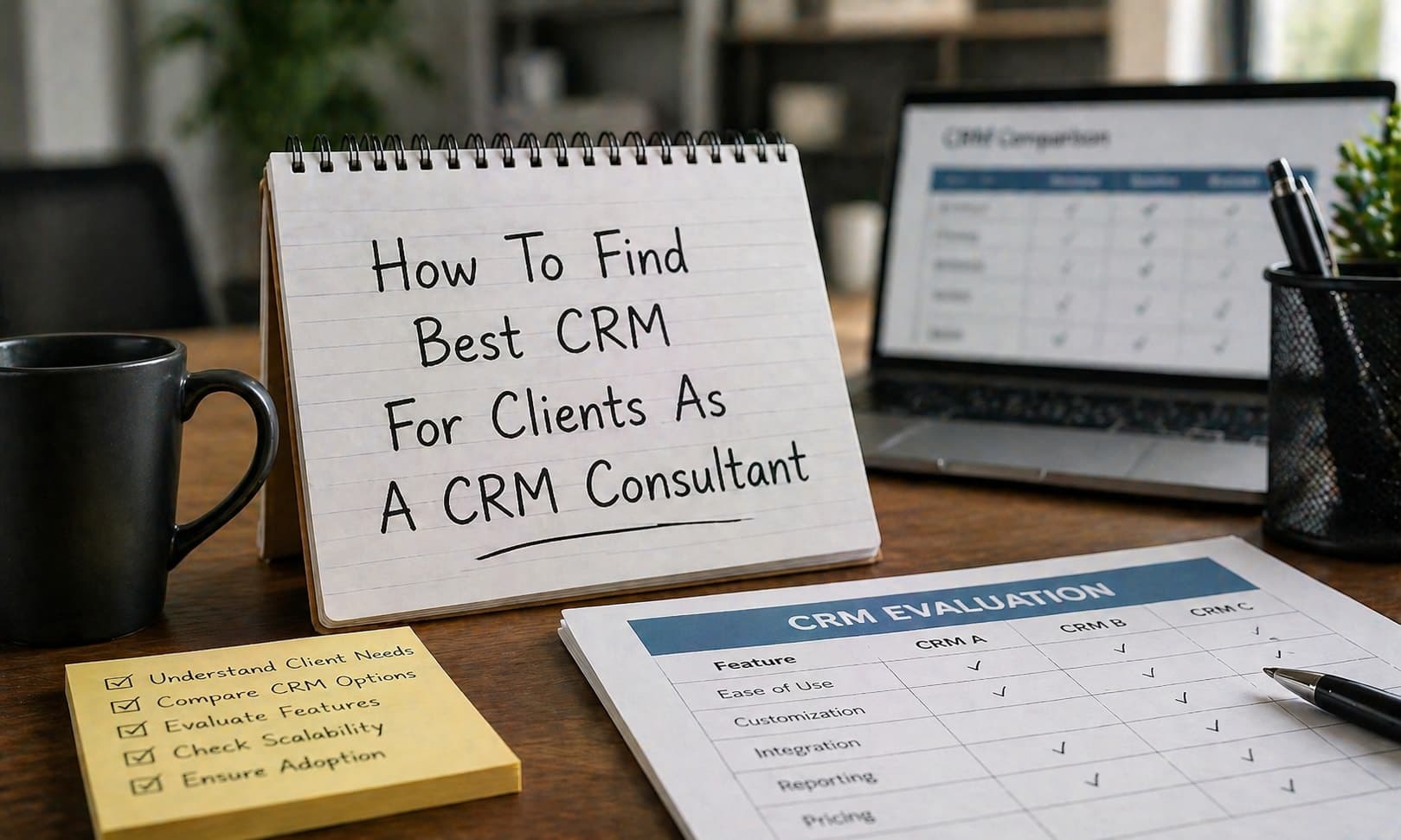

How To Find Best CRM For Clients As A CRM Consultant
How CRM Consultants Choose the Best CRM Software for Clients. Picking a CRM is not about features. It is about fit. Most clients ask for the best CRM. What they actually need is the right CRM for their workflow. As a CRM consultant, your job is to bridge that gap.
Step 1: Understand the Client’s Workflow
Start here, not with tools. Ask clear questions:
How do leads come in
How does the team follow up
What does the sales or service process look like
Where does data get stuck.
Write this down before suggesting anything.
Step 2: Identify the Real Problem
Clients often say they need a CRM. But the issue is usually something else:
Missed follow-ups
Poor tracking
No clear pipeline
Too many tools.
Your role is to find the root problem.
Step 3: Match CRM Type to Business Model
Different businesses need different systems.
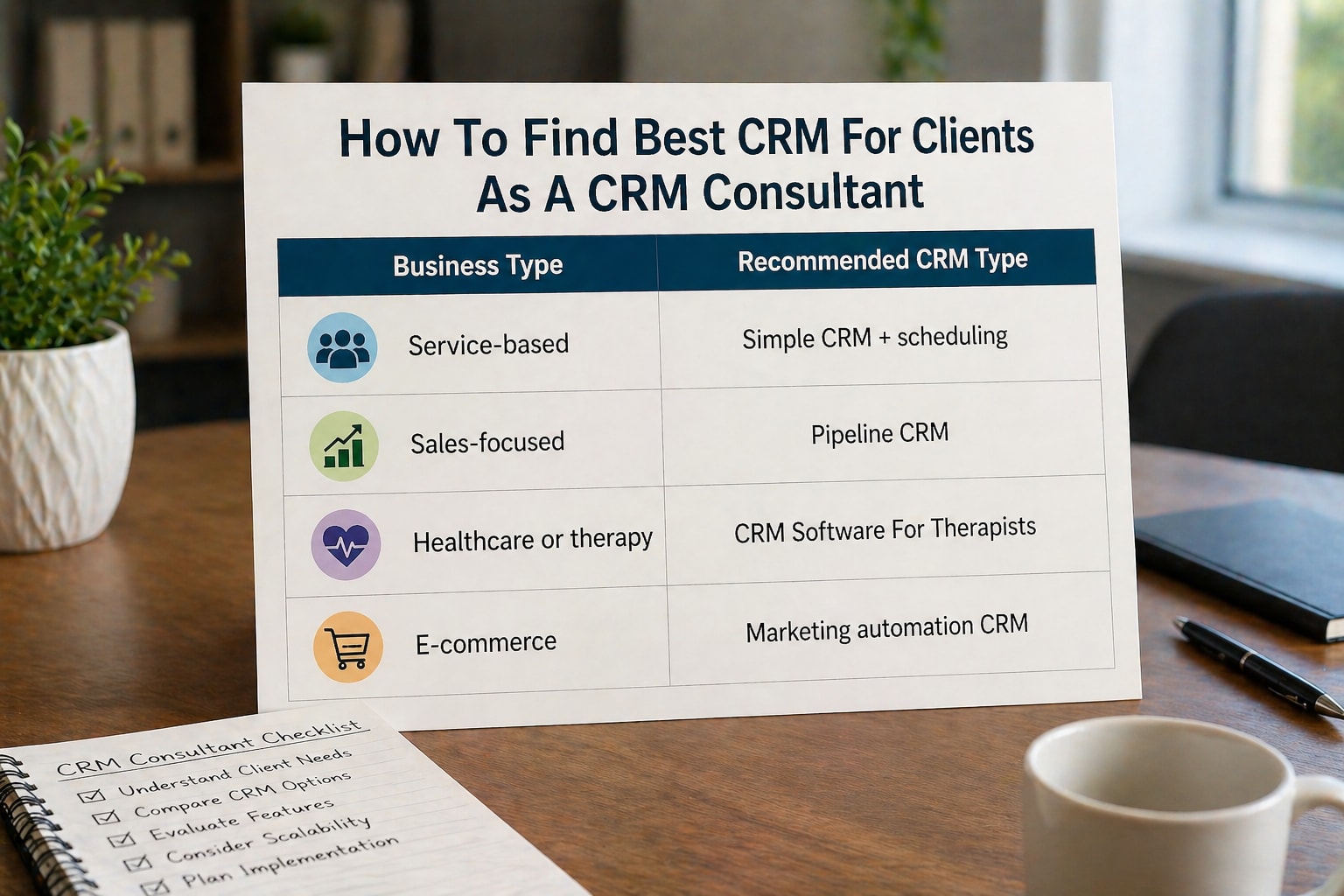
Business Type | Recommended CRM Type |
|---|---|
Service-based | Simple CRM + scheduling |
Sales-focused | Pipeline CRM |
Healthcare or therapy | CRM Software For Therapists |
E-commerce | Marketing automation CRM |
For example, clinics benefit more from CRM Software For Therapists than generic CRMs.
Step 4: Shortlist Tools Based on Simplicity
Do not overwhelm clients with options. Pick 2 to 3 tools that:
Match their workflow
Are easy to use
Fit their budget.
Too many choices slow down decisions.
Step 5: Test With Real Use Cases
Do not rely on demos.
Create real scenarios:
Add a lead
Schedule a follow-up
Move a deal or case forward
Generate a report.
This shows how the CRM works in daily use.
Step 6: Check Adoption, Not Features
A CRM only works if the team uses it. Look for:
Clean interface
Fewer steps for common tasks
Easy onboarding
Many clients fail here. They pick powerful tools that no one uses.
Step 7: Plan Implementation Properly
Even the right CRM can fail with poor setup. Focus on:
Clean data migration
Workflow setup
Team training
Basic automation.
This is where consultants add the most value.
Step 8: Recommend the Right Fit, Not the Biggest Brand
Big tools are not always better. For example:
A small therapy practice will benefit more from CRM Software For Therapists
A startup may need a simple CRM like HubSpot
A growing team may use Zoho or Pipedrive. Always match tool to need.
Common Mistakes CRM Consultants Make
Suggesting tools before understanding workflows
Recommending complex systems to small teams
Ignoring user experience
Skipping training and onboarding. These mistakes reduce trust and results.
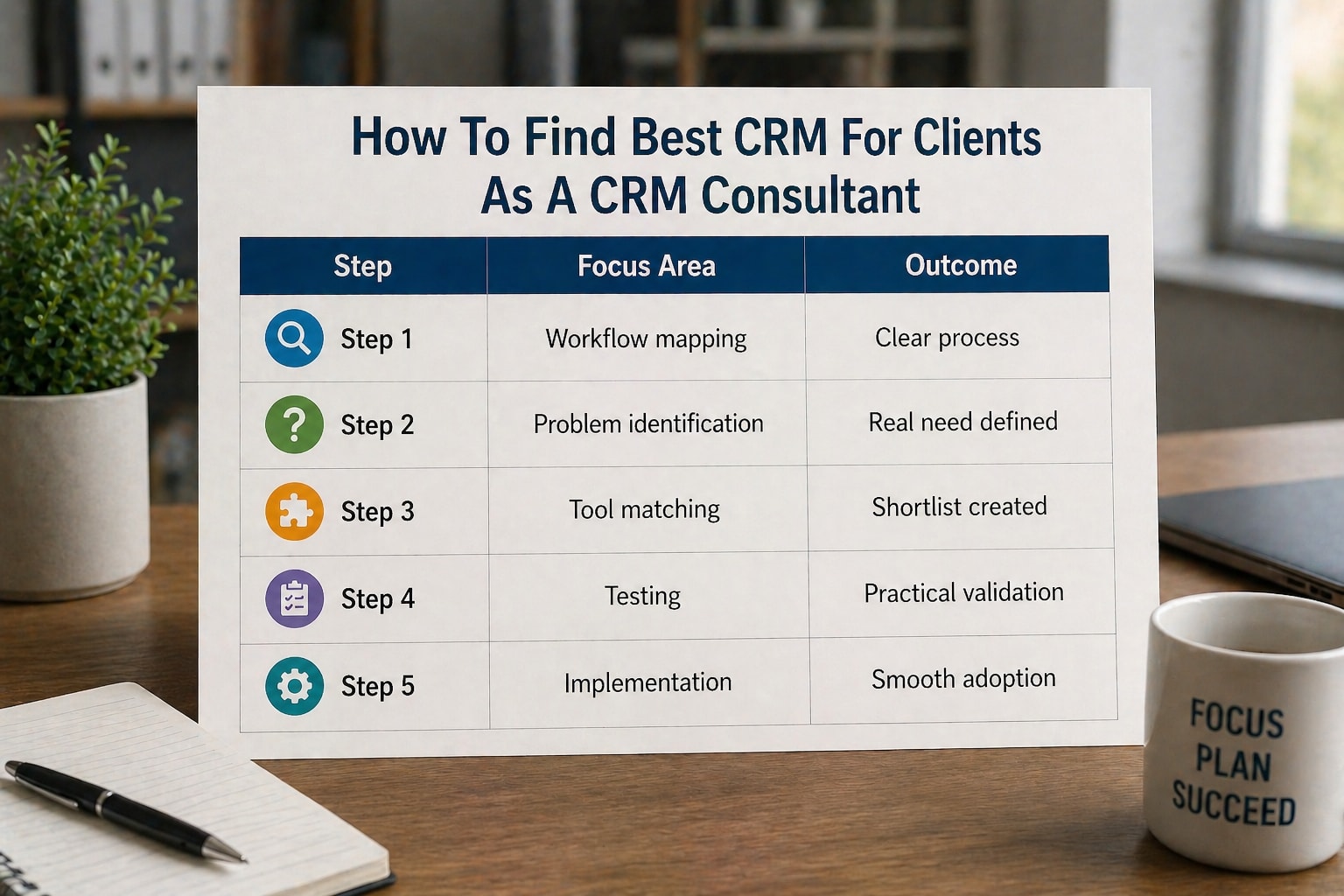
Simple CRM Selection Framework
Step | Focus Area | Outcome |
|---|---|---|
Step 1 | Workflow mapping | Clear process |
Step 2 | Problem identification | Real need defined |
Step 3 | Tool matching | Shortlist created |
Step 4 | Testing | Practical validation |
Step 5 | Implementation | Smooth adoption |
Where CRM Software For Therapists Stands Out
In niche industries like therapy, general CRMs fall short. CRM Software For Therapists works better because it includes:
Session tracking
Appointment scheduling
Follow-up reminders
Client history. This makes it easier for consultants to deliver better outcomes in healthcare projects.
Frequently Asked Questions
How do CRM consultants choose the right system
They analyze workflows, identify problems, and match tools based on real use cases instead of features.
What is the biggest mistake in CRM selection
Choosing a tool based on brand or features without checking how it fits daily work.
Should consultants recommend multiple CRM options
Yes, but limit to two or three strong options to avoid confusion.
When should you suggest CRM Software For Therapists
When working with clinics or therapy practices that need scheduling, client tracking, and follow-ups in one system
Related Posts

Why Therapists Need A HIPAA-Compliant CRM In 2026
Learn why a HIPAA-compliant CRM for therapists is essential. Protect patient data, streamline workflows, and improve practice efficiency safely and securely.

The Importance Of A HIPAA-Compliant CRM For Therapists
Discover why a HIPAA-compliant CRM for therapists is essential. Protect client data, streamline scheduling, billing, and enhance practice efficiency securely.