
AI-Powered CRM For Therapy Practices
A CRM designed for therapy practices offers multiple advantages:
Centralized Patient Records: Store patient information, session notes, and contact details securely in one place.
Appointment Management: Schedule, track, and send reminders to reduce missed sessions.
Automated Follow-Ups: Maintain consistent communication with patients via notifications and emails.
Billing and Invoicing: Track payments and generate invoices quickly.
Data Security: Keep sensitive patient information encrypted and compliant with privacy regulations.
Analytics & Reporting: Gain insights into patient trends, revenue, and practice performance.
How CRM for Therapists Works
A CRM system integrates seamlessly with everyday operations:
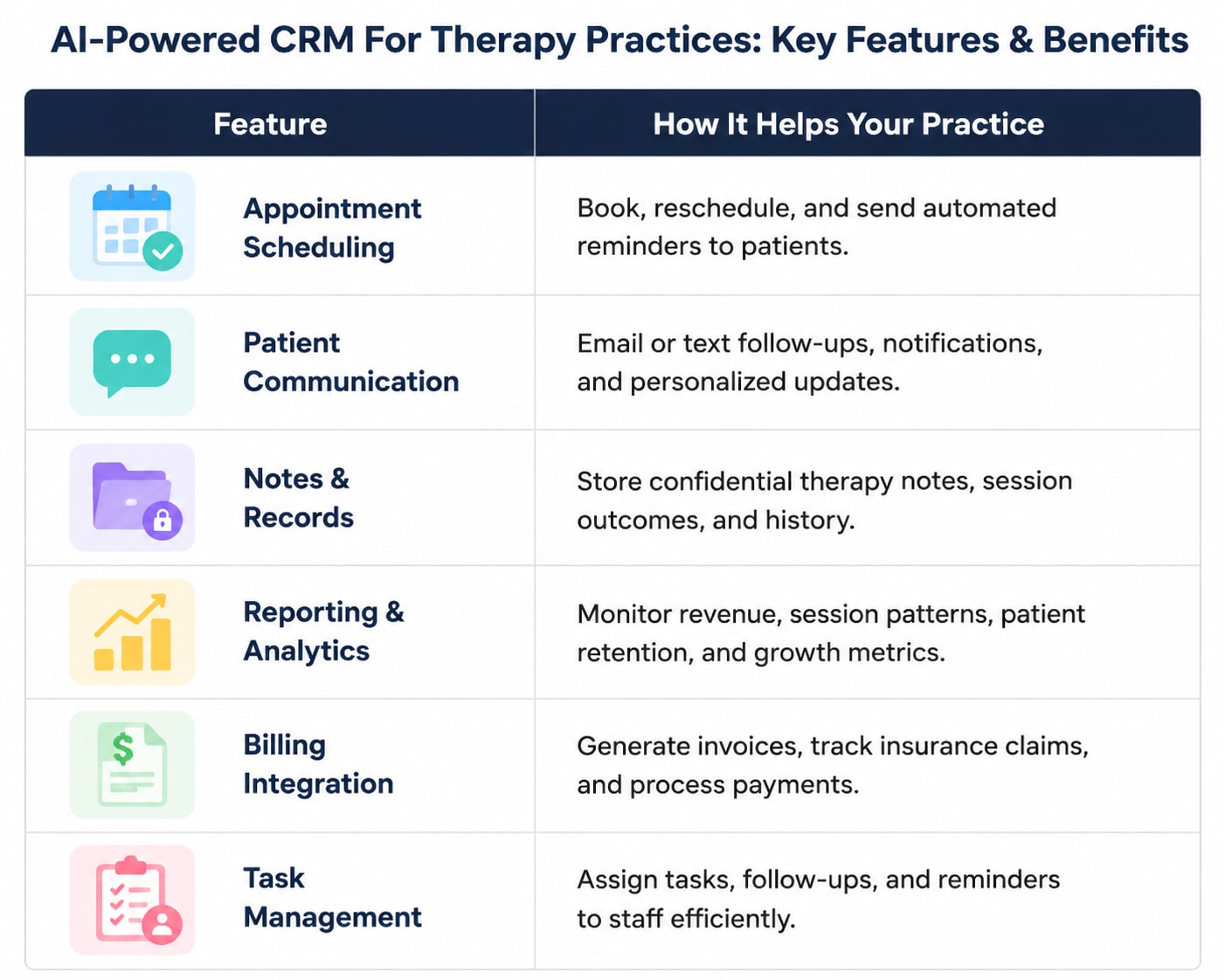
Feature | How It Helps Your Practice |
|---|---|
Appointment Scheduling | Book, reschedule, and send automated reminders to patients. |
Patient Communication | Email or text follow-ups, notifications, and personalized updates. |
Notes & Records | Store confidential therapy notes, session outcomes, and history. |
Reporting & Analytics | Monitor revenue, session patterns, patient retention, and growth metrics. |
Billing Integration | Generate invoices, track insurance claims, and process payments. |
Task Management | Assign tasks, follow-ups, and reminders to staff efficiently. |
CRM for Therapists vs Traditional Practice Management
Here’s a clear comparison of using a CRM versus manual or basic software approaches:
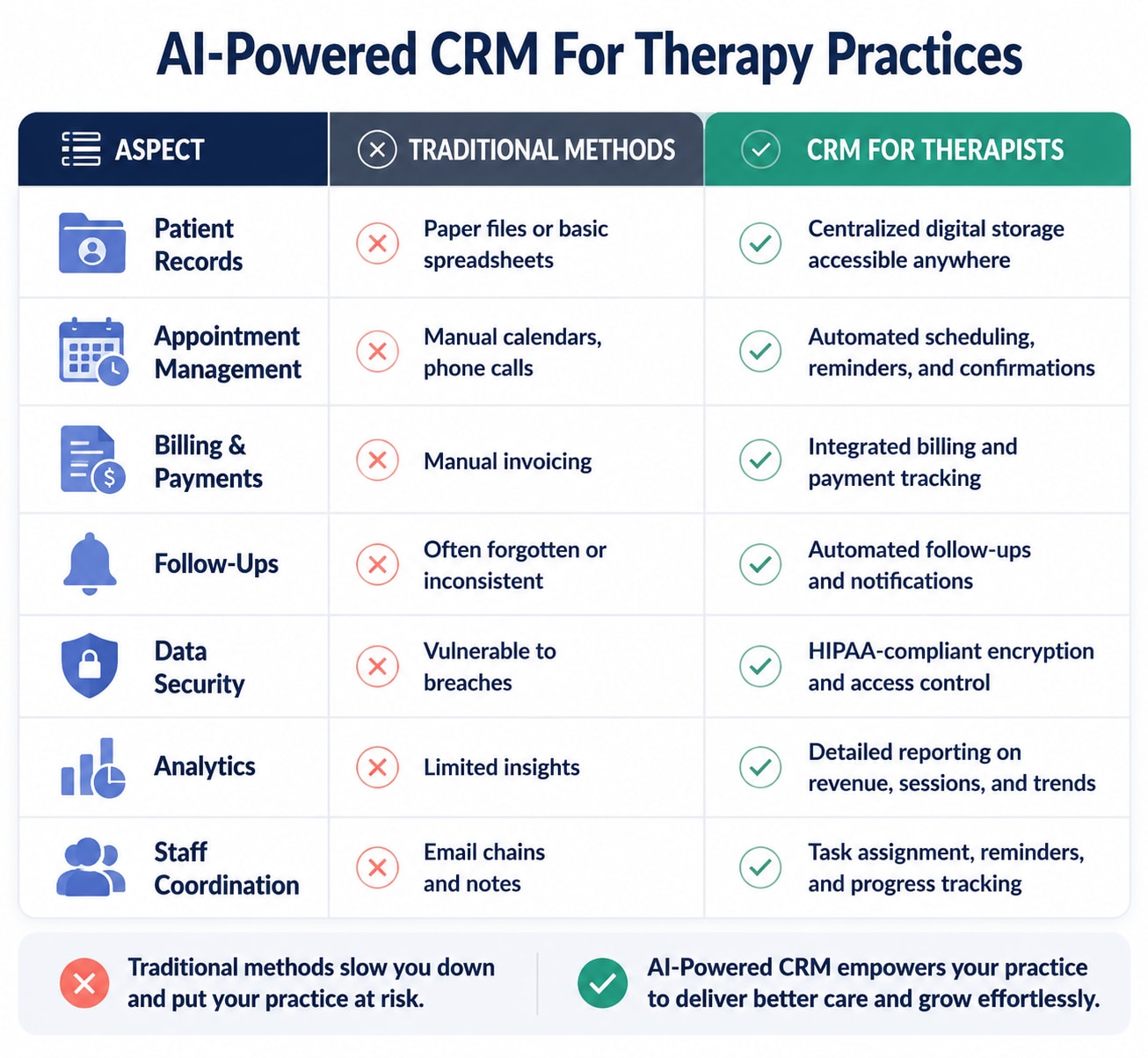
Aspect | Traditional Methods | CRM for Therapists |
|---|---|---|
Patient Records | Paper files or basic spreadsheets | Centralized digital storage accessible anywhere |
Appointment Management | Manual calendars, phone calls | Automated scheduling, reminders, and confirmations |
Billing & Payments | Manual invoicing | Integrated billing and payment tracking |
Follow-Ups | Often forgotten or inconsistent | Automated follow-ups and notifications |
Data Security | Vulnerable to breaches | HIPAA-compliant encryption and access control |
Analytics | Limited insights | Detailed reporting on revenue, sessions, and trends |
Staff Coordination | Email chains and notes | Task assignment, reminders, and progress tracking |
Choosing the Right CRM
When selecting a CRM for Therapists, focus on these factors:
Easy to use for staff and therapists
HIPAA-compliant with secure data handling
Integrates with calendars, emails, and billing systems
Mobile accessibility for on-the-go access
Customizable to fit your specific practice workflow
Reliable support and training options
Frequently Asked Questions:
Why should therapy practices use a CRM?
A CRM for Therapists centralizes patient data, automates routine tasks, reduces scheduling errors, and frees time for patient care.
Is a CRM for Therapists HIPAA compliant?
Top CRMs follow HIPAA regulations to keep patient information safe and secure.
Can I track payments and insurance claims?
Yes, most CRMs integrate billing tools for automated invoicing and insurance tracking.
Can I access my CRM on mobile devices?
Yes, many systems offer mobile apps or responsive web access for management anywhere.
Will it improve patient engagement?
Automated reminders, follow-ups, and personalized communication increase retention and satisfaction.
How does a CRM improve practice efficiency?
It streamlines workflows, reduces errors, organizes patient information, and gives actionable insights for decision-making.
Related Posts

Why Therapists Need A HIPAA-Compliant CRM In 2026
Learn why a HIPAA-compliant CRM for therapists is essential. Protect patient data, streamline workflows, and improve practice efficiency safely and securely.

The Importance Of A HIPAA-Compliant CRM For Therapists
Discover why a HIPAA-compliant CRM for therapists is essential. Protect client data, streamline scheduling, billing, and enhance practice efficiency securely.